LIHEAP · Guide
New Jersey LIHEAP and USF: dates, income limits and how to apply
Last updated 2026-10-24 · Reviewed against official sources · Editorial standards
Key takeaways
- The New Jersey Department of Community Affairs (DCA) runs LIHEAP, also called Home Energy Assistance, and the Universal Service Fund (USF). One application covers both.
- For FFY 2027, applications are taken from Oct. 1, 2026, to June 30, 2027, first come, first served.
- The income limit is 60 percent of the state median income: $4,273 a month for one person and $8,217 for four.
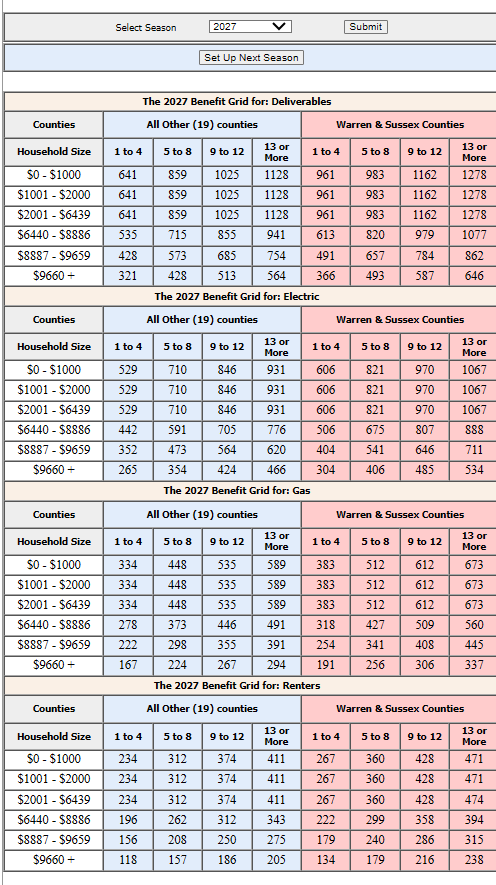
- The 2027 benefit grid runs from $118 to $1,278 a season for heating. Cooling help is $300, and emergency fuel help can reach $800.
- USF helps pay gas and electric costs above a share of income, up to $200 a month.
Application period
DCA's FFY 2027 fact sheet sets the period from Oct. 1, 2026, to June 30, 2027, on a first-come, first-served basis. People 60 or older, or who have a disability, can apply by mail or ask the local agency for a home visit. Other households may apply by mail if the local agency allows it.
Who can get LIHEAP and USF
The household must pay for heating or cooling, either directly or as part of the rent. Gross income must be at or below the limit below. People in public housing or who get rental help cannot get LIHEAP heating help unless they pay their heating costs directly to the fuel supplier. USF also needs an electric or gas bill in a household member's name.
| Household size | Monthly | Yearly |
|---|---|---|
| 1 | $4,273 | $51,273 |
| 2 | $5,587 | $67,049 |
| 3 | $6,902 | $82,825 |
| 4 | $8,217 | $98,602 |
| 5 | $9,532 | $114,378 |
| 6 | $10,846 | $130,154 |
| 7 | $11,093 | $133,112 |
| 8 | $11,339 | $136,070 |
For each person above 12, add $246 a month or $2,952 a year.
How much LIHEAP pays
The heating benefit depends on income, household size, fuel type and heating region. On DCA's 2027 grid, amounts run from $118 to $1,278. Delivered fuels, such as oil and propane, get the most. Warren and Sussex counties get more than the other 19 counties. By state rule, heating help cannot be more than $1,278. Medically necessary cooling help is $300. A household can get up to $4,878 in total program benefits, counting emergency and furnace repair payments.
Gas and electric customers usually get the benefit sent to the utility. People who buy fuel from a supplier usually get a check made out to them and the supplier. If heat is part of the rent, the check goes to the applicant.
Emergency help
An energy emergency means you are without heat or about to be, with no money to buy fuel. It also covers a shutoff notice when heat is part of the rent. Emergency help can pay up to $800 for the first fuel purchase. A reconnection fee of up to $100 is paid on top. Emergency help runs from December through June 30. For electric and gas, it starts after the winter shutoff ban ends on March 15. An eligible household gets some help within 48 hours, or 18 hours if life is at risk. Homeowners can also ask about emergency furnace repair or replacement.
How to apply
Apply online through DCA's energy assistance site, or fill out the paper Home Energy/USF/Weatherization application and bring it to your local community action agency. To find your agency, call the toll-free hotline at 1-800-510-3102.
Frequently asked questions
Do I need a separate application for USF?
No. DCA says the FFY 2027 LIHEAP application is also an application for USF. You can get both at the same time.
When can I apply for LIHEAP in New Jersey?
From Oct. 1, 2026, to June 30, 2027, first come, first served, while funds last.
What is the most USF can pay?
USF helps with gas and electric costs above a set share of income, up to $200 a month.
Sources
- New Jersey DCA, FFY 2027 Fact Sheet (LIHEAP and USF): Application period Oct. 1, 2026, to June 30, 2027; 60 percent of state median income limits; $300 cooling benefit; USF up to $200 a month. Read 2026-10-24.
- New Jersey Department of Community Affairs, Low Income Home Energy Assistance (LIHEAP): How to apply, local agencies, hotline 1-800-510-3102, FY 2027 handbook, fact sheet and benefit matrix. Read 2026-10-24.
- New Jersey DCA, Home Energy Assistance Program Handbook FY 2027: Emergency help rules, the $800 fuel limit, the $1,278 heating limit, the $4,878 program maximum and the Oct. 1 to June 30 application period. Read 2026-10-24.
- New Jersey DCA, FY 2027 Benefit Matrix: 2027 benefit grid by fuel, household size, income and region ($118 to $1,278). Read 2026-10-24.
- ACF, IM 2026-01 Attachment 4: State Median Income by household size, mandatory use in FY 2027: 60 percent of state median income for each state and household size. Read 2026-10-24.
- ACF, LIHEAP Map: State and Territory Contact Listing: State agencies that run LIHEAP and their public inquiry lines. Read 2026-10-24.